🌿 STINGING NETTLE Urtica dioica
- Lee Wellard
- May 13
- 9 min read

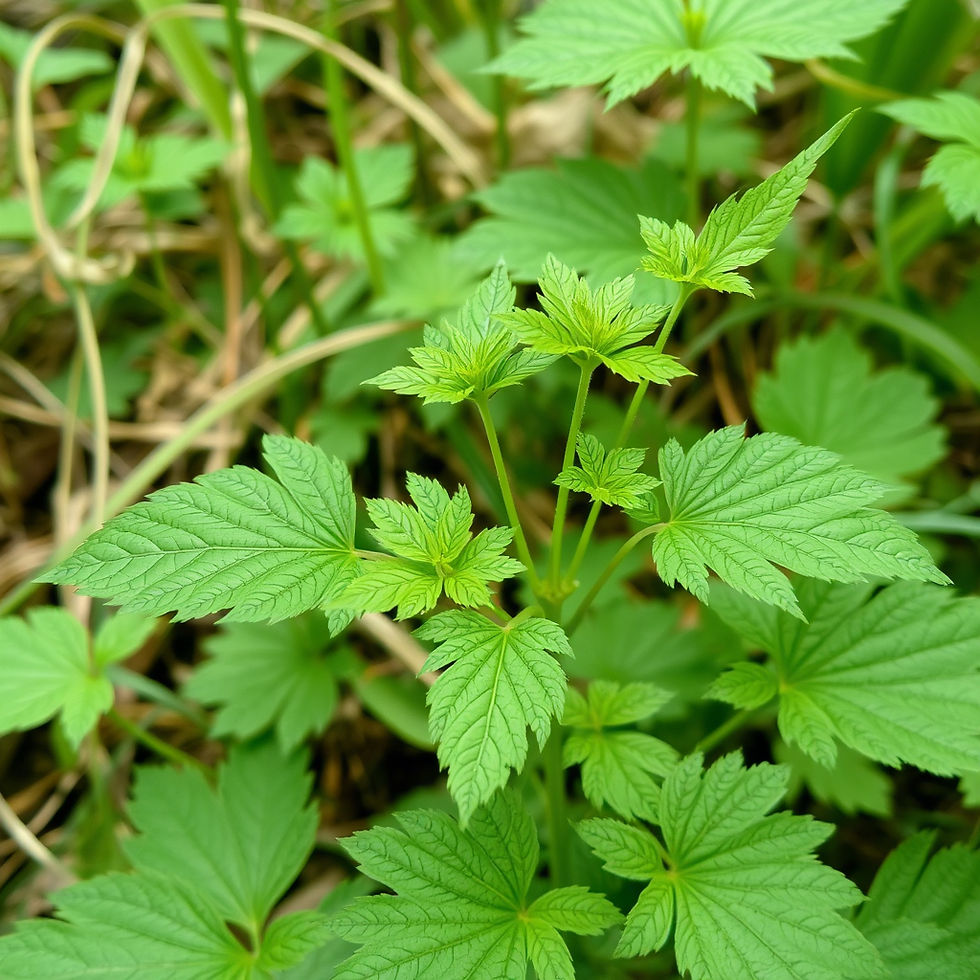
Urtica dioica
Expanded Botanical Monograph & Traditional Wellness Guide
Deep Nourishment • Mineral Vitality • Traditional Herbal Strength
📖 PAGE 1 — INTRODUCTION TO NETTLE
✨ One of Herbalism’s Greatest Nourishing Plants
Stinging nettle (Urtica dioica) is considered one of the most important nourishing herbs in traditional Western herbalism. Although many people recognize nettle because of the temporary sting caused by the fresh plant, herbalists throughout history have regarded nettle as one of nature’s greatest restorative botanical allies.
For centuries nettle has been used as:
food
medicine
tonic
spring restorative
strengthening herb
Traditional herbalists often valued nettle because it combines:
nutrition
vitality
mineral support
gentle therapeutic action
Unlike highly stimulating herbs that may temporarily increase energy while further depleting the body, nettle has traditionally been associated with:
rebuilding from the inside out
🌍 Ancient Relationship With Nettle
Nettle has been used for thousands of years throughout:
Europe
Asia
the Middle East
North America
Historical herbal records describe nettle as:
strengthening
cleansing
restorative
blood-building
nourishing
Because nettle naturally appears in abundance during spring, many traditional cultures viewed it as a symbol of:
renewal
awakening
restoration after winter
🌱 A Plant That Functions Like Food
One of nettle’s unique qualities is that herbalists often viewed it less as a powerful “drug-like” herb and more as:
concentrated green nourishment
Nettle is unusual because it combines:
nutritional density
broad wellness support
traditional therapeutic applications
culinary usefulness
This makes nettle different from many herbs that are used only temporarily.
Instead, nettle has traditionally been consumed:
regularly
seasonally
long-term
as part of daily wellness practices
📖 PAGE 2 — BOTANICAL PROFILE & PLANT CHARACTERISTICS
🌿 Botanical Classification
Category | Information |
Botanical Name | Urtica dioica |
Family | Urticaceae |
Common Names | Stinging nettle, common nettle |
Plant Parts Used | Leaf, stem, root, seed |
Native Regions | Europe, Asia, North America |
🌱 Plant Description
Nettle is a hardy perennial plant featuring:
deep green serrated leaves
square stems
fine silica-rich hairs
spreading underground roots
The fresh plant contains tiny hollow hairs capable of delivering irritating compounds into the skin.
These hairs contain:
histamine
formic acid
acetylcholine
serotonin-like compounds
This temporary sting is one reason the plant earned the name:
“stinging nettle”
Ironically, the same plant capable of causing irritation externally has long been used internally as:
a strengthening tonic
a nourishing infusion
a restorative botanical food
☀️ Growing Conditions
Nettle thrives in:
moist fertile soils
partially shaded environments
temperate climates
nitrogen-rich ground
Healthy nettle patches are often considered indicators of:
mineral-rich soil
Traditional herbalists frequently harvested wild nettle from clean natural areas where the plant grew vigorously.
🌍 Sustainable Harvesting
Responsible harvesting practices are important because nettle plays an ecological role in supporting:
pollinators
butterflies
insects
soil regeneration
Many herbalists prefer:
young spring nettles
organically grown plants
hand-harvested material
minimally processed herbs
📖 PAGE 3 — TRADITIONAL HERBAL HISTORY
🌾 Nettle Through the Centuries
Traditional herbal texts from Europe frequently mention nettle as one of the most useful plants available to ordinary people.
Because nettle grows abundantly in many climates, it became deeply integrated into:
folk medicine
survival traditions
village herbalism
spring nourishment practices
Historically nettle was often consumed after winter months when:
fresh vegetables were scarce
nutrient intake declined
people experienced sluggishness or weakness
🌱 Spring Tonic Traditions
In many traditional cultures, spring was considered a critical time for:
cleansing
rebuilding
renewal
Fresh nettles were commonly gathered and prepared as:
soups
teas
infusions
cooked greens
Traditional herbalists believed this helped restore:
vitality
circulation
digestion
mineral balance
⚔️ Historical Uses Beyond Herbalism
Nettle was not only medicinal.
Historically it was also used for:
textiles
rope
fishing nets
livestock feed
natural dyes
Nettle fiber was once so valued that it was woven into cloth similarly to flax.
During times of scarcity, nettle became an important survival plant because it provided:
nutrition
fiber
herbal support
all from a single plant.
📖 PAGE 4 — NUTRITIONAL PROFILE & MINERAL DENSITY
🥬 One of Herbalism’s Most Nutritive Plants
Nettle is widely respected because it naturally contains:
vitamins
minerals
chlorophyll
amino acids
flavonoids
carotenoids
This nutritional density is one reason traditional herbalists frequently used nettle for:
depletion
weakness
rebuilding
nutritional restoration
🧬 Important Nutrients
Nutrient | Traditional Association |
Iron | Vitality & nourishment |
Calcium | Structural support |
Magnesium | Relaxation & muscle balance |
Potassium | Fluid balance |
Silica | Connective tissue support |
Chlorophyll | Cleansing & vitality |
🌿 Mineral-Rich Green Herb
Traditional herbalists often considered nettle one of the finest:
green mineral herbs
This means it was viewed as especially supportive for:
rebuilding tissues
maintaining vitality
nourishing depleted systems
🌱 Chlorophyll Content
Nettle’s deep green color reflects its chlorophyll content.
Traditional herbal systems often associated chlorophyll-rich plants with:
renewal
cleansing
fresh vitality
nourishment
📖 PAGE 5 — NOURISHMENT & RESTORATIVE SUPPORT
🌾 Restoration Through Nourishment
Nettle’s reputation in traditional herbalism comes largely from its:
nourishing effects
rebuilding qualities
strengthening action
Unlike herbs used for immediate dramatic effects, nettle has historically been valued for:
long-term restoration
Traditional herbalists often recommended nettle during:
weakness
recovery
exhaustion
convalescence
chronic stress
🌿 A Different Herbal Philosophy
Traditional herbal systems frequently emphasized:
nourishment before stimulation
Rather than forcing the body into temporary energy, herbalists believed deep restoration required:
minerals
nourishment
consistent support
time
Nettle perfectly represents this philosophy.
🌱 Long-Term Tonic Use
Nettle was often consumed:
daily
seasonally
over long periods
Traditional practitioners believed the herb worked best through:
consistency
nourishment
gradual rebuilding
rather than aggressive intervention.
📖 PAGE 6 — URINARY & KIDNEY SUPPORT
💧 Traditional Urinary Herb
Nettle has long been associated with:
urinary wellness
kidney support
healthy fluid balance
Traditional herbalists frequently used nettle to encourage:
natural elimination
fluid movement
urinary flow
🌿 Gentle Diuretic Qualities
Nettle is traditionally regarded as:
a nourishing diuretic
Unlike harsh draining diuretics, herbalists often viewed nettle as:
balancing
restorative
mineral supportive
This distinction made nettle especially valued in traditional systems.
🔬 Modern Research Interest
Researchers continue studying nettle for:
urinary wellness
prostate support
inflammatory pathways
antioxidant activity
Some studies have investigated nettle root specifically for:
prostate health
urinary comfort
📖 PAGE 7 — SEASONAL WELLNESS & IMMUNE INTEREST
🌼 Traditional Seasonal Support
Nettle has become especially popular in modern herbalism for:
seasonal wellness
environmental stress support
respiratory comfort
Traditional herbalists often used nettle during periods of:
pollen exposure
seasonal irritation
environmental burden
🌿 Why Scientists Are Interested
Researchers continue studying nettle because it contains:
flavonoids
phenolic compounds
antioxidants
plant nutrients
Some research suggests these compounds may influence:
inflammatory mediators
histamine pathways
immune signaling
⚠️ Research Continues to Evolve
Although promising, modern research is still ongoing.
Traditional herbal use remains one of the strongest foundations for nettle’s reputation in this area.
📖 PAGE 8 — JOINTS, MOBILITY & RECOVERY
🦴 Traditional Joint Support
Traditional herbalists frequently used nettle for:
stiffness
soreness
mobility support
physical recovery
Nettle was commonly included in formulas for:
aging joints
physically active individuals
recovery after strain
🌿 Historical Folk Practices
An old folk practice known as:
urtication
involved lightly brushing fresh nettle against the skin over joints.
Historical practitioners believed this stimulated:
warmth
circulation
movement
Although uncommon today, this reflects nettle’s long-standing association with:
mobility & circulation
🔬 Modern Scientific Interest
Researchers continue investigating nettle’s possible influence on:
cytokine pathways
oxidative stress
inflammatory balance
📖 PAGE 9 — HAIR, SKIN & BEAUTY SUPPORT
✨ Traditional Beauty Herb
Nettle has historically been associated with:
healthy hair
nail strength
skin vitality
connective tissue support
Traditional herbalists frequently connected outer appearance with:
mineral nourishment
vitality
overall wellness
🌿 Silica & Tissue Support
Because nettle naturally contains:
silica
minerals
chlorophyll
it was traditionally believed to support:
tissue resilience
collagen-related structures
hair vitality
🛁 External Preparations
Nettle has historically been used externally in:
scalp rinses
herbal baths
topical washes
These preparations were traditionally valued for:
scalp vitality
soothing support
hair appearance
📖 PAGE 10 — DIGESTIVE & METABOLIC SUPPORT
🌱 Gentle Digestive Nourishment
Nettle has traditionally been used as a gentle nourishing herb for people who needed support rebuilding strength and vitality. While it is not usually described as a strong bitter digestive stimulant, it has long been valued as part of restorative formulas for those who felt depleted, sluggish, or nutritionally run down.
Traditional herbalists often used nettle when digestion seemed connected to overall weakness or low vitality. Because nettle is mineral-rich and food-like, it was commonly included in daily teas and long infusions designed to nourish the whole body rather than force digestive activity.
🌿 Metabolic Wellness Interest
Modern researchers have shown interest in nettle because it contains flavonoids, phenolic compounds, minerals, and antioxidant constituents. These compounds are being explored for their possible role in metabolic wellness, oxidative balance, and healthy inflammatory response.
Nettle has also been traditionally used in spring tonics, where it was believed to help the body transition from winter heaviness into renewed seasonal vitality.
📊 Traditional Digestive Uses
Traditional Use | Herbal Perspective |
Sluggishness | Supports gentle renewal |
Depletion | Provides mineral nourishment |
Spring cleansing | Supports seasonal transition |
Weakness | Used as a rebuilding tonic |
📖 PAGE 11 — NERVOUS SYSTEM & ENERGY SUPPORT
🧠 Restorative Energy
Nettle is not typically classified as a sedative nervine like skullcap or passionflower, but it has long been used by herbalists to support people whose nervous systems were worn down by depletion. In traditional herbal thinking, low energy is not always solved by stimulation; sometimes the body needs minerals, nourishment, and rebuilding.
This is where nettle shines. It was often used for people who felt tired, pale, depleted, or worn out from long-term stress, illness, poor diet, or heavy physical demands.
⚡ Nourishment Instead of Stimulation
Many modern products try to increase energy by stimulating the body. Nettle represents a different approach. It supports vitality through nourishment rather than force.
Traditional herbalists often paired nettle with other restorative herbs such as:
🌾 oatstraw
🌿 alfalfa
🌱 dandelion leaf
🍃 red raspberry leaf
These combinations were designed to nourish and rebuild over time.
📖 PAGE 12 — EXTRACTION METHODS & PREPARATIONS
🌿 Common Preparations
Nettle may be prepared in several traditional ways depending on the desired use. The leaf is most commonly used for mineral nourishment and seasonal wellness, while the root is often discussed separately in relation to urinary and prostate support.
Preparation | Description |
Tea | Simple daily infusion |
Long Infusion | Mineral-rich extraction |
Glycerin Extract | Alcohol-free liquid herbal extract |
Capsules | Powdered herb convenience |
Fresh Cooked Greens | Traditional food use |
🍯 Glycerin Extracts
Vegetable glycerin extracts are valued because they are alcohol-free, naturally pleasant tasting, and gentle for many people. They are especially useful for families and individuals who prefer not to use alcohol-based tinctures.
A glycerin extract may help preserve water-soluble constituents and make nettle easier to take consistently.
☕ Long Infusions
Long infusions are one of the most respected ways to prepare nettle leaf. Herbalists often steep dried nettle for several hours to draw out minerals, chlorophyll, and nourishing compounds.
This method reflects nettle’s traditional identity as a food-like tonic herb rather than a fast-acting stimulant.
📖 PAGE 13 — SAFETY & CONTRAINDICATIONS
⚠️ General Safety
Nettle leaf is generally regarded as a gentle and well-tolerated herb when used appropriately. Because it is mineral-rich and food-like, traditional herbalists often considered it suitable for long-term tonic use.
However, as with all herbs, individual needs vary.
🚫 Use Caution If:
Use professional guidance if:
severe plant allergy exists
diuretic medications are being used
blood sugar medications are being used
there is concern about contamination or wild harvesting
🌿 Fresh Plant Warning
Fresh nettle can sting the skin due to fine hairs on the leaves and stems. Drying, cooking, or proper processing neutralizes the sting and makes the herb safe to handle and consume.
Only harvest fresh nettle with gloves and from clean, unsprayed areas.
📖 PAGE 14 — SCIENTIFIC RESEARCH OVERVIEW
🔬 Major Areas of Research
Nettle has attracted scientific interest because of its nutritional density and wide range of plant compounds. Research has explored nettle’s potential relationship to:
seasonal wellness
urinary function
prostate support
inflammatory balance
antioxidant activity
metabolic markers
📊 Current Evidence Overview
Wellness Area | Research Status |
Urinary support | Moderate clinical interest |
Prostate support | Stronger evidence for nettle root |
Seasonal wellness | Emerging research |
Antioxidant activity | Laboratory + early human interest |
Mineral nourishment | Strong traditional use |
Joint wellness | Traditional + emerging interest |
🧪 Important Distinction
Nettle leaf and nettle root are not identical in traditional or modern use. Nettle leaf is more often used for nourishment, minerals, seasonal support, and urinary flow. Nettle root is more frequently studied for prostate and urinary symptoms.
This distinction matters when writing product education.
📖 PAGE 15 — SCIENTIFIC REFERENCES
📚 References & Further Reading
Chrubasik JE, Roufogalis BD, Wagner H, Chrubasik S. A comprehensive review on nettle effect and efficacy profiles. Phytomedicine. 2007.
Roschek B Jr et al. Nettle extract inhibits key inflammatory events that cause the symptoms of seasonal allergies. Phytotherapy Research. 2009.
Nahata A, Dixit VK. Ameliorative effects of stinging nettle on testosterone-induced prostatic hyperplasia in rats. Andrologia. 2012.
Safarinejad MR. Urtica dioica for treatment of benign prostatic hyperplasia: randomized double-blind placebo-controlled crossover study. Journal of Herbal Pharmacotherapy. 2005.
EMA/HMPC. Assessment report on Urtica dioica L., Urtica urens L., folium/herba. European Medicines Agency.
Mills S, Bone K. Principles and Practice of Phytotherapy.
Hoffmann D. Medical Herbalism.
Chevallier A. Encyclopedia of Herbal Medicine.
📖 PAGE 16 — FINAL SUMMARY & HERBAL PHILOSOPHY
🌟 Final Reflections
Nettle represents one of the most important principles in traditional herbalism:
restoration through nourishment
Its strength is not dramatic force. Its strength is steady rebuilding.
🌿 Why Herbalists Still Love Nettle
Nettle is valued because it is:
mineral-rich
deeply nourishing
widely useful
traditionally restorative
gentle enough for regular use
supportive across multiple body systems
It bridges the line between food and medicine, which is one reason it has remained so beloved in herbal traditions.
🌱 Final Thought
In modern life, many people are overstimulated yet undernourished. Nettle offers a different herbal philosophy: rebuild the body patiently, mineral by mineral, cup by cup, day by day.
For that reason, nettle remains one of herbalism’s great green allies:
🌿 nourishing
💚 strengthening
🌾 mineral-rich
🌱 deeply restorative


Comments