🌿 ASHWAGANDHA ROOT
- Lee Wellard
- May 13
- 6 min read

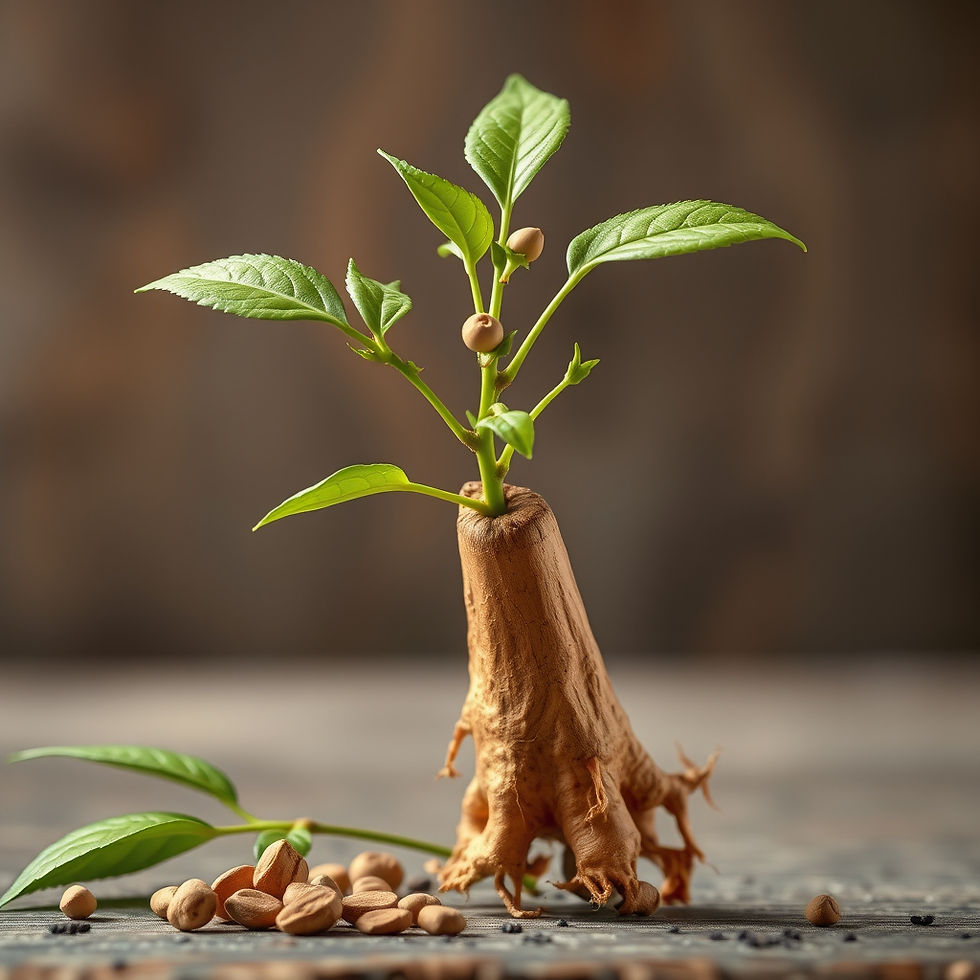
Withania somnifera
Expanded Botanical Monograph & Traditional Wellness Guide
Adaptogenic Support • Nervous System Restoration • Traditional Vitality
📖 PAGE 1 — INTRODUCTION TO ASHWAGANDHA
✨ One of Ayurveda’s Most Revered Herbs
Ashwagandha (Withania somnifera) is one of the most important herbs in traditional Ayurvedic medicine. Revered for thousands of years throughout India and surrounding regions, ashwagandha has historically been associated with:
🌙 nervous system restoration
⚡ vitality & resilience
🧠 mental balance
💪 strength & recovery
😌 stress support
🌿 longevity traditions
In Ayurveda, ashwagandha is often classified as:
a Rasayana herb
Rasayanas are traditionally viewed as rejuvenating botanicals intended to:
restore vitality
strengthen resilience
nourish depleted systems
support healthy aging
🌱 Meaning of the Name
The name:
“Ashwagandha”
roughly translates to:
“smell of the horse”
Traditional explanations for this name include:
the earthy aroma of the root
the belief that the herb promoted strength and endurance associated with a horse
🌿 A Different Type of Energy Herb
Unlike stimulating herbs that temporarily increase alertness, ashwagandha has traditionally been viewed as:
grounding
restorative
stabilizing
nourishing
Its traditional reputation centers around:
rebuilding resilience rather than forcing stimulation
📖 PAGE 2 — BOTANICAL PROFILE & PLANT CHARACTERISTICS
🌱 Botanical Information
Category | Information |
Botanical Name | Withania somnifera |
Family | Solanaceae |
Common Name | Ashwagandha |
Plant Part Used | Root |
Native Regions | India, Middle East, Africa |
🌿 Plant Description
Ashwagandha is a small shrub featuring:
soft green leaves
delicate yellow-green flowers
orange-red berries
thick pale roots
The:
root
is the primary medicinal portion traditionally used in herbal preparations.
☀️ Growing Conditions
Ashwagandha thrives in:
warm dry climates
sandy soil
semi-arid conditions
regions with abundant sunlight
It has been cultivated throughout:
India
the Middle East
Northern Africa
for centuries.
🌱 Traditional Harvesting
The roots are generally harvested once mature, then:
cleaned
dried
powdered
extracted
Traditional Ayurvedic practitioners often emphasized:
careful preparation
seasonal harvesting
quality sourcing
📖 PAGE 3 — HISTORY & AYURVEDIC TRADITION
🌍 Ancient Ayurvedic Use
Ashwagandha has been used in Ayurveda for thousands of years as a major tonic herb.
Traditional Ayurvedic texts associated ashwagandha with:
vitality
stamina
restoration
reproductive wellness
nervous system support
🌿 Rasayana Philosophy
Rasayana herbs were traditionally used to support:
longevity
resilience
vitality
balanced aging
Ashwagandha became one of Ayurveda’s most respected Rasayanas because it was believed to:
strengthen weakened systems gradually over time
🌱 Traditional Ayurvedic Qualities
In Ayurvedic energetics, ashwagandha is often described as:
warming
grounding
strengthening
stabilizing
Traditional practitioners frequently recommended it for individuals experiencing:
exhaustion
depletion
stress
weakness
📖 PAGE 4 — ACTIVE COMPOUNDS & PHYTOCHEMISTRY
🧬 Key Constituents
Ashwagandha contains numerous plant compounds including:
withanolides
alkaloids
sitoindosides
steroidal lactones
These compounds continue attracting scientific interest because of their potential relationship to:
stress response
neurological wellness
inflammation balance
vitality
🌿 Withanolides
Withanolides are considered the primary bioactive compounds in ashwagandha.
Researchers continue studying these compounds for their possible influence on:
stress physiology
immune signaling
oxidative balance
nervous system activity
🛡️ Antioxidant Interest
Ashwagandha also contains antioxidant compounds that continue attracting research regarding:
oxidative stress
cellular resilience
healthy aging support
📊 Standardized Extracts
Many modern supplements standardize ashwagandha extracts based on:
withanolide content
to ensure consistency between products.
📖 PAGE 5 — STRESS SUPPORT & ADAPTOGENIC REPUTATION
🌿 One of the World’s Most Famous Adaptogens
Ashwagandha is commonly classified as:
an adaptogenic herb
Adaptogens are herbs traditionally believed to help the body adapt to:
stress
physical strain
environmental burden
mental fatigue
🌱 Traditional Stress Philosophy
Traditional herbal systems often viewed chronic stress as something that gradually depleted:
vitality
resilience
nervous system balance
Ashwagandha was traditionally used to:
rebuild reserves
encourage steadiness
support long-term resilience
🔬 Modern Research Interest
Modern studies continue exploring ashwagandha’s relationship to:
cortisol balance
stress response
nervous system regulation
emotional wellness
Some human trials have investigated standardized ashwagandha extracts during periods of stress.
📖 PAGE 6 — NERVOUS SYSTEM & EMOTIONAL WELLNESS
🧠 Traditional Nervous System Tonic
Ashwagandha has long been associated with:
nervous system nourishment
emotional steadiness
calm vitality
restoration after depletion
Unlike heavily sedating herbs, ashwagandha is often traditionally described as:
calming while strengthening
🌿 Emotional Balance Traditions
Traditional practitioners frequently used ashwagandha during periods of:
nervous exhaustion
emotional overwhelm
fatigue
irritability
burnout
It was often paired with herbs such as:
brahmi
holy basil
shatavari
oatstraw
🌙 Evening & Restorative Use
Ashwagandha was commonly included in:
nighttime tonics
nourishing herbal blends
restorative formulations
because traditional herbalists believed deep restoration occurred during:
rest
nourishment
calmness
📖 PAGE 7 — ENERGY, STRENGTH & PHYSICAL RECOVERY
⚡ Traditional Vitality Herb
Ashwagandha has historically been associated with:
stamina
endurance
strength
recovery after depletion
Traditional Ayurvedic practitioners often recommended it for:
weakness
exhaustion
physical fatigue
long-term stress recovery
🌿 Rebuilding Rather Than Stimulating
Ashwagandha differs from stimulating herbs because its traditional reputation centers around:
restoration rather than forced energy
Herbalists often considered it especially useful for individuals who felt:
chronically tired
depleted
overworked
run down
🔬 Modern Performance Interest
Researchers continue studying ashwagandha for:
exercise recovery
muscle strength
endurance
stress adaptation
Several modern human studies have explored these areas.
📖 PAGE 8 — COGNITIVE SUPPORT & HEALTHY AGING
🧠 Traditional Mental Clarity
Traditional Ayurvedic systems associated balanced vitality with:
mental clarity
focus
calm awareness
Ashwagandha was often used alongside cognitive herbs such as:
brahmi
gotu kola
turmeric
🌿 Modern Research Areas
Researchers continue exploring ashwagandha’s relationship to:
cognitive wellness
memory
neurological resilience
healthy aging
🛡️ Oxidative Stress Interest
Because oxidative stress is associated with:
aging
inflammation
neurological wear
researchers continue studying antioxidant-rich herbs like ashwagandha for their potential role in:
cellular protection
healthy aging support
📖 PAGE 9 — IMMUNE & WHOLE-BODY WELLNESS
🛡️ Traditional Whole-Body Tonic
Ashwagandha was traditionally considered:
a whole-body restorative herb
rather than a narrowly targeted botanical.
Traditional herbalists often believed stress affected:
digestion
immunity
vitality
sleep
resilience
For this reason, deeply restorative herbs were viewed as broadly supportive.
🌿 Immune Research Interest
Researchers continue studying ashwagandha’s relationship to:
immune signaling
inflammatory pathways
stress physiology
resilience mechanisms
🌱 A Foundational Wellness Herb
For many Ayurvedic practitioners, ashwagandha remains one of the foundational herbs for:
restoration
longevity
resilience
vitality
📖 PAGE 10 — EXTRACTION METHODS & PREPARATIONS
🌿 Common Preparations
Preparation | Description |
Powder | Traditional root powder |
Tea | Warm root decoction |
Glycerin Extract | Alcohol-free liquid extract |
Capsules | Standardized extract |
Tablets | Concentrated preparations |
🍯 Glycerin Extracts
Vegetable glycerin extracts are valued because they:
are alcohol-free
taste milder
are gentle for sensitive individuals
preserve water-soluble compounds
These preparations are popular among individuals avoiding alcohol-based products.
☕ Traditional Decoctions
Ashwagandha root was traditionally simmered into:
decoctions
tonics
restorative formulas
Warm preparations were believed to support:
grounding
assimilation
nourishment
📖 PAGE 11 — SAFETY & CONTRAINDICATIONS
⚠️ General Safety
Ashwagandha is generally considered safe when used appropriately.
However, individual needs vary and professional guidance may be appropriate in some situations.
🚫 Use Caution If:
pregnancy requires supervision
thyroid disorders are present
sedative medications are being used
autoimmune conditions require medical oversight
🌿 Possible Side Effects
Some individuals may experience:
digestive upset
drowsiness
nausea
stomach discomfort
These effects are generally mild.
📖 PAGE 12 — SCIENTIFIC RESEARCH OVERVIEW
🔬 Major Areas of Scientific Interest
Researchers continue studying ashwagandha for:
stress response
cortisol balance
physical performance
cognitive wellness
nervous system resilience
📊 Current Research Overview
Area | Research Interest |
Stress Support | Strong |
Adaptogenic Activity | Strong |
Physical Recovery | Moderate–Strong |
Cognitive Wellness | Emerging |
Healthy Aging | Moderate |
🌿 Why Scientists Continue Studying Ashwagandha
Ashwagandha combines:
ancient traditional use
adaptogenic reputation
growing clinical research
broad systemic interest
making it one of the most important herbs in modern integrative herbalism.
📖 PAGE 13 — SCIENTIFIC REFERENCES & FINAL SUMMARY
📚 References
Chandrasekhar K et al. Ashwagandha and stress reduction. Indian Journal of Psychological Medicine.
Lopresti AL et al. Ashwagandha and stress response studies. Medicine.
Singh N et al. Overview of Ashwagandha therapeutic uses. Alternative Medicine Review.
Hoffmann D. Medical Herbalism.
Mills S, Bone K. Principles and Practice of Phytotherapy.
Ayurvedic Materia Medica references on Withania somnifera.
Research regarding withanolides & adaptogenic activity.
Journal of Ethnopharmacology publications on Ashwagandha.
🌟 Final Reflections
Ashwagandha represents one of herbalism’s oldest restorative philosophies:
rebuild resilience through nourishment, steadiness, and restoration
Its enduring role in Ayurveda continues to make it one of the world’s most respected adaptogenic herbs.
🌿 Final Thought
For many herbalists, ashwagandha symbolizes:
grounded vitality
calm resilience
nervous system restoration
balanced strength
It remains one of herbalism’s great allies for modern stress and depletion:
🌿 restorative
🧠 grounding
⚡ strengthening
🌱 deeply rejuvenating


Comments