🌿 Gymnema sylvestre

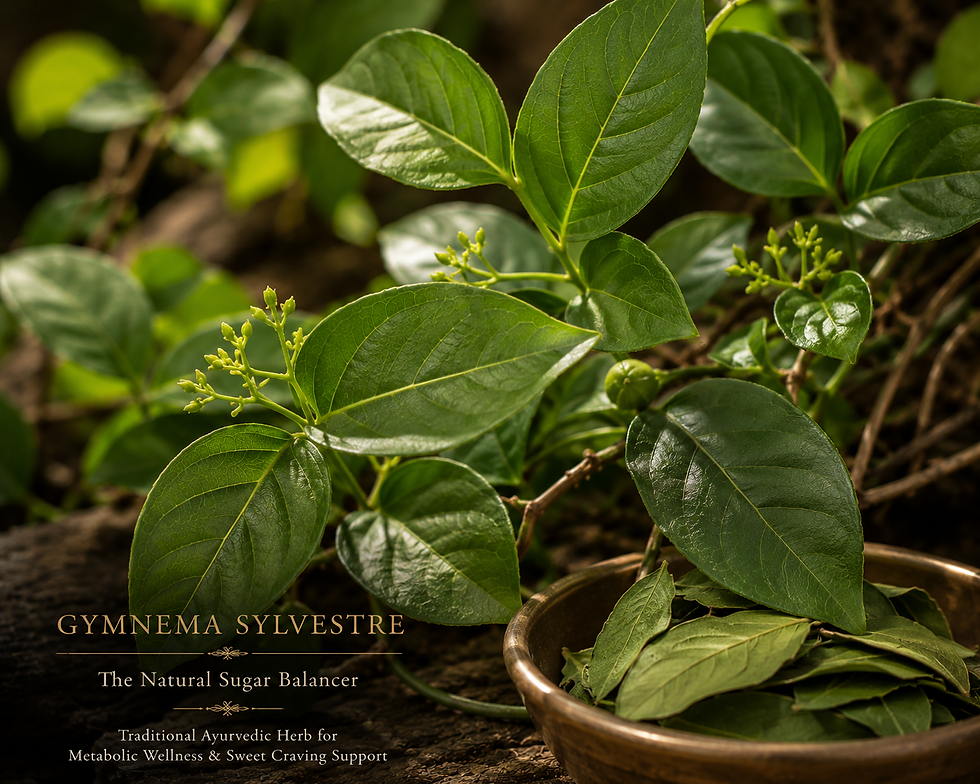
Expanded Botanical Monograph & Traditional Wellness Guide
Blood Sugar Support • Metabolic Wellness • Sweet Craving Balance • Ayurvedic Botanical Care
📖 PAGE 1 — INTRODUCTION TO GYMNEMA
✨ One of Ayurveda’s Most Famous Sugar-Balancing Herbs
Gymnema sylvestre has been treasured for centuries in Ayurvedic medicine as one of the world’s most respected herbs regarding:
⚖️ blood sugar balance traditions
🌿 metabolic wellness
🍬 sweet craving support
💧 pancreatic wellness traditions
🛡️ healthy glucose metabolism
⚡ restorative endocrine support
Traditional Ayurvedic practitioners frequently viewed Gymnema as:
one of herbalism’s great “sugar-regulating” botanicals.
Unlike stimulant herbs that force rapid change, Gymnema became known for:
gradual metabolic support
sweet taste modulation
endocrine nourishment traditions
balancing excess cravings
🌍 Ancient Ayurvedic Traditions
Gymnema has been used for centuries throughout:
India
Ayurvedic medicine systems
traditional metabolic wellness practices
Historical use often focused on:
excessive sweetness cravings
urinary imbalance traditions
metabolic excess
digestive wellness
endocrine support
🌿 “Destroyer of Sugar”
One of Gymnema’s most famous traditional names is:
Gurmar
which translates approximately to:
“Destroyer of Sugar.”
This name arose because chewing the leaves temporarily reduces the perception of sweet taste.
📖 PAGE 2 — BOTANICAL PROFILE & PLANT CHARACTERISTICS
🌱 Botanical Information
Category | Information |
Botanical Name | Gymnema sylvestre |
Family | Apocynaceae |
Common Name | Gymnema |
Plant Part Used | Leaf |
Native Regions | India, Africa, Asia |
Traditional Classification | Metabolic support herb |
🌿 Plant Description
Gymnema is a climbing woody vine featuring:
oval leaves
delicate yellow flowers
twisting stems
tropical forest growth habits
The leaves became the primary medicinal portion traditionally used.
🌳 Forest Vine Symbolism
Traditional systems often associated climbing vines with:
adaptability
movement
regulation
balancing pathways
Gymnema’s spreading nature contributed symbolically to its association with:
metabolic regulation.
✨ Traditional Taste Experiment
One of the herb’s most famous characteristics is:
temporary sweet taste suppression.
After chewing Gymnema leaves, sugary foods may taste dramatically less sweet for a short period.
📖 PAGE 3 — HISTORY & TRADITIONAL HERBAL USE
🌍 Ayurvedic Historical Use
Gymnema has historically been used regarding:
sugar cravings
metabolic imbalance traditions
digestive support
urinary wellness traditions
healthy body composition support
Ayurvedic practitioners often emphasized:
restoring metabolic balance gradually.
🌿 Traditional Endocrine Philosophy
Traditional systems frequently believed:
excessive sweetness reflects imbalance
cravings may signal metabolic dysregulation
restoring balance requires nourishment and moderation
Gymnema became associated with:
reducing excess desire
supporting restraint
metabolic harmony
✨ Long-Term Herbal Philosophy
Traditional herbalists often viewed Gymnema as:
gradual
balancing
restorative
regulatory
rather than aggressively forcing rapid changes.
📖 PAGE 4 — ACTIVE COMPOUNDS & PHYTOCHEMISTRY
🧬 Key Constituents
Gymnema contains numerous compounds including:
gymnemic acids
saponins
flavonoids
gurmarin peptides
antioxidant compounds
These contribute to:
glucose metabolism research
taste receptor studies
metabolic physiology interest
🌿 Gymnemic Acids
Gymnemic acids are among the plant’s most studied compounds.
Researchers continue studying them regarding:
sweet taste receptor interactions
glucose absorption pathways
metabolic physiology
🔬 Modern Scientific Interest
Researchers continue studying Gymnema regarding:
insulin signaling
pancreatic physiology
glucose metabolism
appetite regulation
metabolic wellness
Research remains ongoing and evolving.
📖 PAGE 5 — BLOOD SUGAR & METABOLIC SUPPORT
⚖️ Traditional Blood Sugar Herb
Gymnema has historically been associated with:
healthy blood sugar balance traditions
metabolic resilience
endocrine support
reducing excess sweetness cravings
Traditional practitioners frequently viewed Gymnema as:
deeply balancing to metabolic excess.
🌿 Ayurvedic Metabolic Philosophy
Traditional systems often believed:
excess sweetness weakens balance and vitality.
Gymnema became associated with:
moderation
regulation
restoring healthy metabolic rhythm
🔬 Modern Blood Sugar Research
Modern studies involving Gymnema have explored:
insulin signaling pathways
glucose absorption
pancreatic physiology
metabolic markers
Research remains active and promising.
📖 PAGE 6 — SWEET CRAVINGS & APPETITE SUPPORT
🍬 Traditional Sweet Craving Herb
Gymnema became especially famous because of its traditional association with:
reducing sugar cravings
moderating excessive appetite
balancing desire for sweets
🌿 Taste Receptor Physiology
One of Gymnema’s most fascinating properties is its ability to:
temporarily reduce sweet taste perception.
Researchers believe certain compounds may interact with:
taste receptors
sweetness signaling pathways
✨ Craving & Behavioral Support
Traditional practitioners often believed:
reducing excessive sweetness perception may support healthier choices.
This became central to Gymnema’s historical reputation.
📖 PAGE 7 — PANCREATIC & ENDOCRINE SUPPORT
💧 Traditional Pancreatic Support Herb
Gymnema has historically been associated with:
pancreatic wellness traditions
endocrine support
metabolic resilience
glucose regulation traditions
🔬 Pancreatic Research Interest
Researchers continue studying Gymnema regarding:
pancreatic beta-cell physiology
insulin pathways
glucose regulation
metabolic signaling
⚠️ Important Clarification
Traditional metabolic use does NOT equal:
guaranteed blood sugar control
replacement for medical supervision
cure claims
Professional monitoring remains extremely important.
📖 PAGE 8 — WEIGHT MANAGEMENT & METABOLIC BALANCE
🌿 Traditional Body Composition Support
Gymnema has historically been associated with:
appetite balance
reducing excessive sweetness intake
metabolic wellness
healthy body composition traditions
⚖️ Energy Balance Philosophy
Traditional systems frequently viewed:
cravings
excess intake
metabolic stagnation
as interconnected.
Gymnema became associated with:
restoring moderation and balance.
🔬 Modern Weight Management Interest
Researchers continue studying Gymnema regarding:
appetite signaling
caloric intake patterns
glucose metabolism
metabolic regulation
📖 PAGE 9 — DIGESTIVE & GUT WELLNESS SUPPORT
🌿 Traditional Digestive Herb
Gymnema has historically appeared in herbal systems regarding:
digestive wellness
sluggish metabolism traditions
nutrient assimilation
gut balance
🌱 Bitter & Metabolic Physiology
Gymnema possesses mildly bitter properties traditionally associated with:
digestive stimulation
metabolic activation
healthy secretions
🔬 Gut Microbiome Interest
Researchers continue studying metabolic herbs regarding:
gut microbiome interactions
insulin signaling
digestive inflammation pathways
📖 PAGE 10 — THE CONTROVERSY OF NATURAL BLOOD SUGAR SUPPORT
⚠️ Oversimplification Concerns
One major controversy surrounding Gymnema is the tendency to present it as:
a “natural cure” for blood sugar disorders.
Experienced herbalists and clinicians frequently caution against:
oversimplified claims
replacing medical supervision
unrealistic expectations
🌿 Metabolism Is Highly Complex
Blood sugar regulation involves:
hormones
diet
stress
sleep
exercise
liver physiology
pancreatic function
genetics
No single herb controls this entire system.
⚠️ Importance of Monitoring
Because Gymnema may influence glucose pathways:
blood sugar monitoring is important,
especially alongside medications.
📖 PAGE 11 — EXTRACTION METHODS & PREPARATIONS
🌿 Common Preparations
Preparation | Description |
Tea | Traditional leaf infusion |
Capsules | Powdered leaf |
Glycerin Extract | Alcohol-free liquid extract |
Tincture | Concentrated extract |
Metabolic Formulas | Combined wellness blends |
☕ Traditional Tea Preparation
Preparation Method
Add Gymnema leaves to hot water.
Cover and steep 10–15 minutes.
Strain.
Drink warm.
Flavor profile:
mildly bitter
earthy
herbal
🍯 Glycerin Extracts
Vegetable glycerin extracts are valued because they:
are alcohol-free
preserve water-soluble compounds
are easy to administer
support long-term use
📖 PAGE 12 — SAFETY & CONTRAINDICATIONS
⚠️ General Safety
Gymnema is generally regarded as safe when used appropriately.
🚫 Use Caution If:
diabetes medications are used
hypoglycemia tendencies exist
pregnancy requires supervision
surgery is planned
🌿 Possible Side Effects
Some individuals may experience:
dizziness
digestive upset
low blood sugar symptoms
nausea
particularly alongside glucose-lowering therapies.
📖 PAGE 13 — MODERN SCIENTIFIC DATA & RESEARCH FINDINGS
🔬 Blood Sugar & Metabolic Studies
Numerous studies involving Gymnema have explored:
glucose metabolism
insulin signaling
appetite regulation
pancreatic physiology
🌿 Sweet Taste Receptor Research
Gymnema remains especially famous scientifically because of:
its sweet taste receptor effects.
This remains one of herbal medicine’s most fascinating physiological phenomena.
⚠️ Research Perspective
While Gymnema demonstrates promising biological activity, responses vary significantly and research remains evolving.
📖 PAGE 14 — SCIENTIFIC REFERENCES
📚 References
Hoffmann D. Medical Herbalism.
Mills S, Bone K. Principles and Practice of Phytotherapy.
Ayurvedic materia medica literature.
Gymnema metabolic research publications.
Insulin signaling studies.
Journal of Ethnopharmacology publications.
Botanical glucose physiology research.
Traditional Ayurvedic herbal references.
📖 PAGE 15 — FINAL REFLECTIONS & BOTANICAL PHILOSOPHY
🌟 Final Reflections
Gymnema represents one of herbalism’s enduring philosophies:
restore moderation, support balance, and reduce excess rather than force aggressive change.
Its traditional reputation regarding:
metabolic wellness
blood sugar support
sweet craving balance
endocrine resilience
appetite moderation
continues to make it one of the world’s most respected metabolic herbs.
🌿 Final Thought
For many herbalists, Gymnema symbolizes:
moderation
restraint
endocrine balance
metabolic wisdom
healthy regulation
It remains one of herbalism’s great traditional botanical allies for:
⚖️ blood sugar balance traditions🍬 sweet craving support💧 endocrine wellness🌿 metabolic resilience


Comments