🌳 Jamaican Dogwood (Piscidia piscipula)

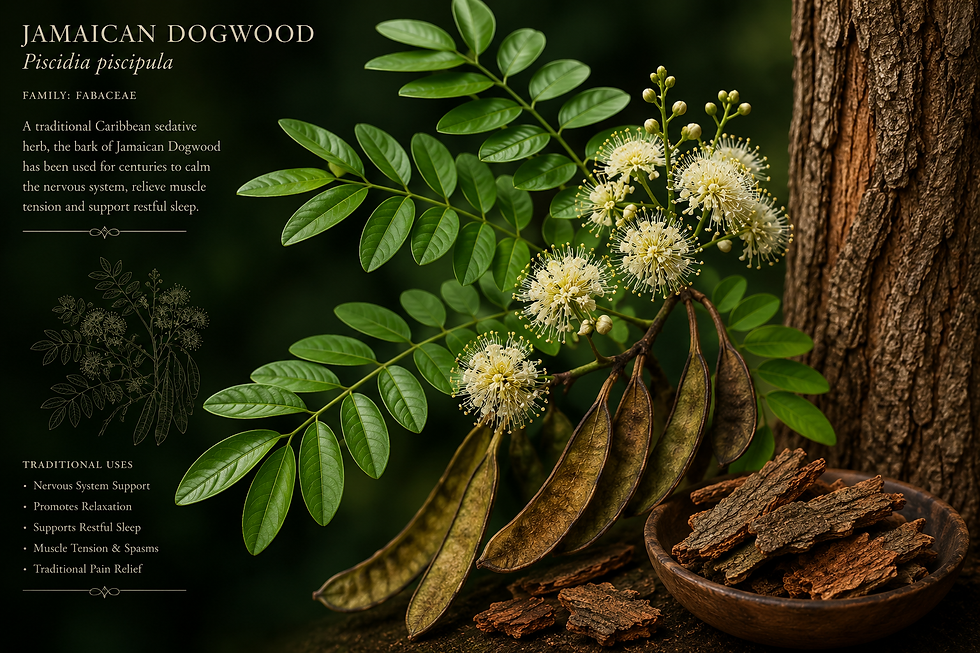
Expanded Botanical Monograph & Traditional Wellness Guide
Nervous System Support • Traditional Relaxation Herb • Muscular Comfort • Historical Sedative Botanical
📖 PAGE 1 — INTRODUCTION TO JAMAICAN DOGWOOD
✨ One of Herbalism’s Most Powerful Traditional Relaxation Herbs
Jamaican Dogwood (Piscidia piscipula) has been respected for centuries as one of traditional herbalism’s strongest calming and relaxing botanicals. Historically associated with:
🌙 nervous system support
😌 relaxation
💪 muscular comfort traditions
🛌 sleep support
🌿 tension relief
⚡ calming overstimulation
Traditional herbalists frequently regarded Jamaican Dogwood as:
a potent sedative and antispasmodic herb.
Unlike gentle nervines such as chamomile or lemon balm, Jamaican Dogwood developed a reputation for:
deeper relaxation
stronger calming action
physical tension support
sedative-like herbal properties
🌍 Traditional Geographic Use
Jamaican Dogwood has historically been used throughout:
Jamaica
the Caribbean
Central America
parts of Mexico
tropical folk medicine systems
It became especially associated with:
relaxation traditions
pain-support folklore
sleep rituals
calming preparations
🌿 A Powerful Traditional Herb
Traditional herbalists often considered Jamaican Dogwood:
significantly stronger than most common calming herbs.
Because of this reputation, many practitioners historically emphasized:
careful dosing
moderate use
professional guidance
📖 PAGE 2 — BOTANICAL PROFILE & PLANT CHARACTERISTICS
🌱 Botanical Information
Category | Information |
Botanical Name | Piscidia piscipula |
Family | Fabaceae |
Common Name | Jamaican Dogwood |
Plant Part Used | Bark primarily |
Native Regions | Caribbean & Central America |
Traditional Classification | Sedative & antispasmodic herb |
🌳 Plant Description
Jamaican Dogwood is a tropical tree featuring:
rough bark
spreading branches
compound leaves
fragrant flowers
The bark became the primary medicinal portion traditionally used.
🌊 Traditional Fishing Use
The botanical name:
Piscidia
relates to fish.
Historically, some Indigenous groups reportedly used portions of the plant to:
stun fish
slow fish movement
simplify fishing
This contributed to the herb’s historical reputation as:
strongly physiologically active.
✨ Symbolism in Herbalism
Traditional systems often associated Jamaican Dogwood with:
calmness
heaviness
sedation
release of tension
📖 PAGE 3 — HISTORY & TRADITIONAL HERBAL USE
🌍 Folk Medicine Traditions
Jamaican Dogwood has historically been used in:
Caribbean herbalism
folk medicine systems
traditional botanical wellness practices
Historical use often focused on:
nervous tension
muscular discomfort traditions
sleeplessness
restlessness
calming support
🌿 Traditional Sedative Reputation
Traditional herbalists frequently classified Jamaican Dogwood as:
a sedative herb.
Unlike mild relaxing teas, Jamaican Dogwood became associated with:
deeper calming effects
physical heaviness
muscular relaxation
reduced agitation
⚠️ Historical Respect for Potency
Because of its strong reputation, traditional practitioners often viewed Jamaican Dogwood as:
powerful
serious
not casually used
This historical caution continues today among many herbalists.
📖 PAGE 4 — ACTIVE COMPOUNDS & PHYTOCHEMISTRY
🧬 Key Constituents
Jamaican Dogwood contains numerous compounds including:
rotenoids
isoflavones
piscidin
resinous compounds
flavonoids
These contribute to:
nervous system research interest
sedative properties
muscular relaxation studies
🌿 Rotenoid Compounds
Some compounds within Jamaican Dogwood belong to classes associated with:
biological activity
nervous system effects
traditional sedative actions
🔬 Modern Scientific Interest
Researchers continue studying Jamaican Dogwood regarding:
nervous system physiology
muscle relaxation
sedative pathways
botanical analgesic interest
Research remains limited compared with more mainstream herbs.
📖 PAGE 5 — NERVOUS SYSTEM & RELAXATION SUPPORT
🌙 Traditional Nervous System Herb
Jamaican Dogwood has historically been associated with:
calming agitation
reducing nervous tension
emotional settling
physical relaxation
Traditional herbalists often used Jamaican Dogwood regarding:
overstimulation
restlessness
inability to relax
tension-related discomfort
🌿 Sedative Herbal Philosophy
Traditional systems frequently distinguished between:
gentle nervines and
stronger sedative botanicals.
Jamaican Dogwood became associated with:
deeper calming support.
✨ Physical & Emotional Relaxation
Traditional practitioners often believed:
physical tension and
emotional tension
were deeply interconnected.
Jamaican Dogwood became associated with relaxing:
both body and mind.
📖 PAGE 6 — SLEEP & RESTFULNESS TRADITIONS
🛌 Traditional Sleep Herb
Jamaican Dogwood has historically been associated with:
sleep support traditions
calming nighttime restlessness
relaxing tension before sleep
settling nervous agitation
🌙 Traditional Bedtime Use
Some traditional practitioners reportedly used Jamaican Dogwood in:
evening preparations
calming formulas
sleep-support combinations
often alongside:
valerian
hops
passionflower
skullcap
⚠️ Stronger Sedative Reputation
Unlike gentle bedtime teas, Jamaican Dogwood was often regarded as:
considerably more powerful.
Because of this, traditional herbalists frequently emphasized:
caution
moderate intake
📖 PAGE 7 — MUSCULAR COMFORT & ANTISPASMODIC TRADITIONS
💪 Traditional Muscle Relaxation Herb
Jamaican Dogwood has historically been associated with:
muscular comfort
tension release
antispasmodic traditions
physical relaxation
Traditional systems often used the herb regarding:
cramping traditions
muscular tightness
physical agitation
🌿 Antispasmodic Herbal Classification
Traditional herbalists frequently classified Jamaican Dogwood as:
an antispasmodic herb.
Antispasmodic herbs were traditionally associated with:
reducing spasms
calming contractions
easing tension
✨ Relaxation Through Release
Traditional practitioners often believed:
releasing muscular tension supports nervous system calmness.
This philosophy strongly shaped Jamaican Dogwood’s historical use.
📖 PAGE 8 — HISTORICAL PAIN-SUPPORT TRADITIONS & SCIENCE
🌿 Traditional Comfort Herb
Historically, Jamaican Dogwood became associated with:
physical discomfort support traditions
calming pain-related tension
muscular relaxation
soothing agitation
Traditional use frequently focused on:
tension-related discomfort
nervous overstimulation
restlessness associated with discomfort
💪 Pain & Muscle Tension Connection
Traditional systems often believed:
muscular tension amplifies pain.
When the nervous system becomes overstimulated:
muscles tighten
spasms increase
discomfort intensifies
pain perception may worsen
Jamaican Dogwood became associated with:
relaxing muscular contractions
calming nervous agitation
reducing physical tension patterns
This helped contribute to its reputation regarding:
pain-support traditions.
🔬 Scientific Interest in Pain Pathways
Modern researchers have investigated compounds within Jamaican Dogwood regarding:
nervous system modulation
muscular relaxation
sedative pathways
pain-signaling physiology
Some laboratory studies suggest certain compounds within the plant may influence:
central nervous system activity
smooth muscle relaxation
neuromuscular signaling
though research remains limited.
🌿 Sedation & Pain Perception
One reason sedative herbs may alter pain experience is because:
anxiety
nervous system activation
emotional distress
muscular guarding
can intensify pain perception.
Traditional herbalists frequently believed calming the nervous system could:
indirectly reduce suffering associated with discomfort.
Jamaican Dogwood’s traditional sedative properties contributed strongly to this philosophy.
⚠️ Important Scientific Clarification
Modern evidence regarding Jamaican Dogwood’s pain-support properties remains:
incomplete
limited
understudied
Most evidence currently comes from:
historical use
ethnobotanical traditions
laboratory observations
early pharmacological interest
rather than large modern human clinical trials.
🌿 Balanced Evidence-Informed Perspective
A balanced perspective may be:
✅ Jamaican Dogwood has a long history of traditional use regarding pain-support traditions.✅ Traditional herbalists frequently associated it with muscular relaxation and nervous system calming.✅ Some compounds demonstrate biological activity involving nervous system pathways.⚠️ However, modern clinical evidence remains limited and incomplete.⚠️ Because of its potency and sedative reputation, cautious use remains important.
📖 PAGE 9 — RESPIRATORY & COUGH TRADITIONS
🌿 Historical Respiratory Use
Some traditional herbal systems reportedly used Jamaican Dogwood regarding:
cough traditions
spasmodic respiratory irritation
nervous cough patterns
🌙 Relaxation & Breathing Philosophy
Traditional herbalists often believed:
tension worsens breathing discomfort
calmness supports respiratory ease
Jamaican Dogwood’s sedative qualities contributed to these traditions.
⚠️ Modern Evidence Remains Limited
Modern clinical evidence specifically supporting respiratory use remains limited and evolving.
📖 PAGE 10 — THE CONTROVERSY OF POTENCY & SAFETY
⚠️ A Historically Powerful Herb
Jamaican Dogwood became controversial primarily because:
it is considered a stronger nervous system herb.
Some herbalists avoid it entirely because of:
potency concerns
sedation potential
limited modern research
toxicology uncertainty
🌿 Traditional Herbalist Perspective
Some experienced herbalists argue:
traditional moderate use matters greatly.
They point to:
long-standing folk use
historical preparation methods
careful dosing traditions
⚠️ Importance of Professional Caution
Even herbalists supportive of Jamaican Dogwood traditions often emphasize:
conservative dosing
avoiding casual experimentation
particularly because of the herb’s:
strong sedative reputation.
📖 PAGE 11 — EXTRACTION METHODS & PREPARATIONS
🌿 Common Preparations
Preparation | Description |
Decoction | Traditional bark simmering |
Glycerin Extract | Alcohol-free liquid extract |
Tincture | Concentrated extract |
Capsules | Powdered bark |
Traditional Formula Blends | Combined calming preparations |
☕ Traditional Decoction
Preparation Method
Add bark to water.
Simmer gently 20–30 minutes.
Strain.
Use cautiously.
Flavor profile:
bitter
woody
earthy
🍯 Glycerin Extracts
Vegetable glycerin extracts are valued because they:
are alcohol-free
preserve water-soluble compounds
taste milder
are easier to administer carefully
📖 PAGE 12 — SAFETY & CONTRAINDICATIONS
⚠️ General Safety
Jamaican Dogwood should be approached cautiously because of its:
sedative reputation
historical potency
🚫 Avoid or Use Only Under Supervision If:
pregnancy exists
breastfeeding occurs
sedative medications are used
neurological conditions require supervision
🌿 Possible Side Effects
Some individuals may experience:
dizziness
nausea
heavy sedation
headache
excessive drowsiness
particularly with excessive intake.
📖 PAGE 13 — MODERN SCIENTIFIC DATA & RESEARCH FINDINGS
🔬 Limited Clinical Research
Compared with mainstream herbs, Jamaican Dogwood has relatively:
limited human clinical data
minimal large-scale trials
sparse modern toxicology studies
🌿 Laboratory Research Interest
Researchers continue studying compounds within Jamaican Dogwood regarding:
nervous system physiology
sedative pathways
muscular relaxation
biological activity
⚠️ Research Limitations
Modern evidence remains incomplete regarding:
long-term safety
optimal dosing
standardization
clinical applications
This contributes to continuing caution among practitioners.
📖 PAGE 14 — SCIENTIFIC REFERENCES
📚 References
Hoffmann D. Medical Herbalism.
Mills S, Bone K. Principles and Practice of Phytotherapy.
Chevallier A. Encyclopedia of Herbal Medicine.
Caribbean ethnobotanical literature.
Traditional tropical herbal medicine references.
Nervous system phytochemistry studies.
Botanical sedative research publications.
Journal of Ethnopharmacology references.
📖 PAGE 15 — FINAL REFLECTIONS
🌟 Final Reflections
Jamaican Dogwood represents one of herbalism’s important reminders that:
some traditional plants possess significant physiological activity and deserve serious respect.
Its traditional reputation regarding:
nervous system support
muscular relaxation
sleep traditions
calming tension
sedative wellness support
continues to make it one of herbalism’s most intriguing traditional botanicals.
📖 PAGE 16 — FINAL SUMMARY & BOTANICAL PHILOSOPHY
🌿 Final Thought
For many herbalists, Jamaican Dogwood symbolizes:
deep relaxation
physical release
calming heaviness
traditional sedative wisdom
respect for potent botanicals
It remains one of herbalism’s notable traditional botanical allies for:
🌙 nervous system calming🛌 traditional sleep support💪 muscular relaxation traditions🌿 restorative calming care


Comments