🌿 Panax Ginseng Root (Panax ginseng)
- Lee Wellard
- May 15
- 5 min read

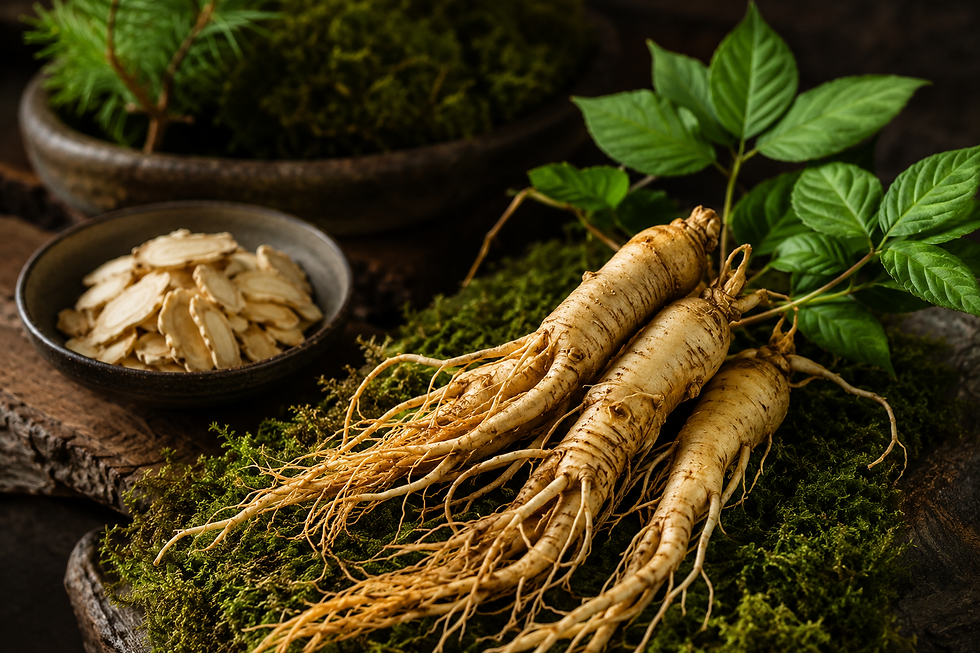
Expanded Botanical Monograph & Traditional Wellness Guide
Adaptogenic Vitality • Energy Resilience • Cognitive Support • Traditional Longevity Herb
📖 PAGE 1 — INTRODUCTION TO GINSENG ROOT
✨ One of the World’s Most Revered Herbal Tonics
Panax ginseng has been treasured for thousands of years as one of the most respected plants in traditional herbal medicine. Often referred to as:
“The King of Herbs”
ginseng became famous throughout Asia for its association with:
⚡ vitality
🧠 mental clarity
🌿 resilience
💪 physical endurance
✨ longevity
🔥 restorative energy
Traditional herbalists frequently viewed ginseng not as a quick stimulant, but as:
a deep restorative tonic.
Unlike temporary energy products, ginseng became valued for its traditional reputation regarding:
recovery
adaptation
sustained vitality
restoration after depletion
🌍 Ancient Herbal Prestige
Ginseng has historically been used throughout:
China
Korea
Eastern Asia
traditional royal herbal systems
It became one of the most prestigious herbs in:
imperial wellness traditions
vitality tonics
longevity formulas
elite botanical medicine systems
Historically, high-quality wild ginseng roots were considered:
extraordinarily valuable.
🌿 The Meaning of “Panax”
The botanical name:
Panax
comes from Greek roots meaning:
“all-healing.”
This reflected traditional beliefs regarding ginseng’s broad restorative reputation.
📖 PAGE 2 — BOTANICAL PROFILE & PLANT CHARACTERISTICS
🌱 Botanical Information
Category | Information |
Botanical Name | Panax ginseng |
Family | Araliaceae |
Common Name | Asian Ginseng |
Plant Part Used | Root |
Native Regions | Korea, China, Siberia |
Traditional Classification | Adaptogenic tonic herb |
🌿 Plant Description
Ginseng is a slow-growing perennial plant featuring:
green compound leaves
small red berries
fleshy tan roots
forked root structures
The root became especially prized because its shape was traditionally viewed as:
symbolically human-like.
Traditional herbal systems often believed this reflected:
whole-body support
vitality
restoration
☀️ Growth & Cultivation
Ginseng requires:
shaded forest environments
rich soil
patience
careful cultivation
Some roots are aged:
4–6 years
before harvest.
This contributes to:
rarity
value
prestige
📖 PAGE 3 — HISTORY & TRADITIONAL HERBAL USE
🌍 Ancient Eastern Herbalism
For thousands of years, ginseng has been associated with:
energy restoration
resilience
mental stamina
longevity traditions
recovery from exhaustion
Traditional herbal systems frequently categorized ginseng as:
a superior tonic herb.
🌿 Traditional Adaptogenic Philosophy
Although the modern word “adaptogen” is relatively recent, traditional herbal systems long believed some herbs helped the body:
adapt to stress
maintain resilience
preserve vitality
support recovery
Ginseng became one of the most famous herbs within this philosophy.
✨ Traditional Uses Included
fatigue recovery
mental exhaustion
physical weakness
aging support
restorative wellness tonics
📖 PAGE 4 — ACTIVE COMPOUNDS & PHYTOCHEMISTRY
🧬 Key Constituents
Ginseng contains numerous plant compounds including:
ginsenosides
polysaccharides
flavonoids
peptides
polyacetylenes
These compounds contribute to:
scientific interest
adaptogenic research
vitality studies
🌿 Ginsenosides
Ginsenosides are the primary active compounds most associated with:
stress response interest
cognitive research
vitality investigations
energy metabolism studies
Researchers continue studying these compounds extensively.
🔬 Scientific Interest
Modern research involving ginseng continues exploring:
stress physiology
endurance
cognition
immune response
metabolic wellness
Research remains ongoing and evolving.
📖 PAGE 5 — ENERGY & VITALITY SUPPORT
⚡ Traditional Vitality Herb
Ginseng has long been associated with:
sustained energy
resilience
endurance
stamina
recovery support
Traditional herbalists often viewed ginseng differently from stimulants.
Rather than producing:
rapid artificial stimulation
ginseng was traditionally believed to:
build deeper reserves over time.
🌿 Adaptation & Recovery
Traditional herbal systems frequently emphasized:
balance
restoration
resilience
Ginseng became associated with:
helping depleted individuals recover
maintaining endurance during stress
supporting sustained vitality
✨ Energy Without Harshness
Unlike strong stimulants, traditional ginseng use emphasized:
steadiness
long-term nourishment
balanced vitality
📖 PAGE 6 — COGNITIVE & MENTAL PERFORMANCE SUPPORT
🧠 Traditional Mental Clarity Herb
Ginseng has historically been associated with:
concentration
focus
mental stamina
cognitive endurance
Traditional scholars and practitioners often consumed ginseng during periods of:
intense study
mental exertion
prolonged work
🔬 Modern Cognitive Research
Researchers continue studying ginseng regarding:
memory
focus
mental fatigue
cognitive processing
stress resilience
Research remains ongoing.
🌿 Mental Endurance Philosophy
Traditional herbalists often believed true vitality included:
mental clarity
emotional resilience
calm endurance
Ginseng became associated with this broader concept of:
whole-person vitality.
📖 PAGE 7 — STRESS & ADAPTOGENIC SUPPORT
🌿 Adaptogenic Interest
Modern herbalism frequently classifies ginseng as:
an adaptogenic herb.
Adaptogens are traditionally associated with:
stress resilience
physiological balance
adaptive capacity
endurance support
🌱 Traditional Stress Philosophy
Traditional systems often believed chronic stress gradually weakened:
vitality
digestion
endurance
resilience
Ginseng became one of the classic herbs used during periods of:
exhaustion
depletion
overwork
✨ Recovery & Restoration
Traditional herbalists often emphasized:
restoration over stimulation.
This distinction became central to ginseng’s reputation.
📖 PAGE 8 — IMMUNE & SEASONAL WELLNESS SUPPORT
🛡️ Traditional Defensive Vitality
Ginseng has historically been associated with:
resilience
seasonal wellness
recovery support
defensive vitality
Traditional systems often viewed deeply nourished individuals as:
more resilient overall.
🔬 Modern Research Interest
Researchers continue studying ginseng regarding:
immune modulation
inflammatory pathways
stress physiology
resilience mechanisms
Research remains active and evolving.
🌿 Seasonal Use Traditions
Some traditional practitioners used ginseng:
during winter
during recovery periods
during times of fatigue
during seasonal stress
📖 PAGE 9 — HEALTHY AGING & LONGEVITY TRADITIONS
✨ Traditional Longevity Herb
Ginseng became famous historically as:
a longevity botanical.
Traditional wellness systems associated it with:
endurance
graceful aging
preserved vitality
sustained strength
🌱 Vitality Through Balance
Traditional herbalists often believed aging was influenced by:
depletion
overwork
chronic stress
poor restoration
Ginseng fit strongly into traditions emphasizing:
replenishment and resilience.
🔬 Healthy Aging Interest
Researchers continue studying ginseng regarding:
oxidative stress
cellular aging
vitality pathways
metabolic resilience
📖 PAGE 10 — EXTRACTION METHODS & PREPARATIONS
🌿 Common Preparations
Preparation | Description |
Tea | Traditional decoction |
Glycerin Extract | Alcohol-free liquid extract |
Powder | Dried root powder |
Capsules | Concentrated root |
Decoction | Long-simmered root preparation |
☕ Traditional Decoction
Preparation Method
Add sliced ginseng root to water.
Simmer gently 20–40 minutes.
Strain.
Drink warm.
🍯 Glycerin Extracts
Vegetable glycerin extracts are valued because they:
are alcohol-free
preserve water-soluble compounds
taste pleasant
are family-friendly
📖 PAGE 11 — SAFETY & CONTRAINDICATIONS
⚠️ General Safety
Ginseng is generally regarded as safe when used appropriately.
🚫 Use Caution If:
stimulant sensitivity exists
blood pressure conditions require supervision
medications interact with metabolism
excessive intake occurs
🌿 Possible Side Effects
Some individuals may experience:
overstimulation
insomnia
headaches
digestive upset
nervousness
particularly with excessive use.
📖 PAGE 12 — SCIENTIFIC REFERENCES & FINAL SUMMARY
📚 References
Hoffmann D. Medical Herbalism.
Mills S, Bone K. Principles and Practice of Phytotherapy.
Chevallier A. Encyclopedia of Herbal Medicine.
Journal of Ginseng Research publications.
Research regarding ginsenosides & adaptogenic activity.
Studies on cognition & stress physiology.
Botanical antioxidant research publications.
Traditional Eastern herbal medicine references.
🌟 Final Reflections
Ginseng root represents one of herbalism’s great philosophies:
resilience through restoration.
Its long-standing reputation regarding:
vitality
endurance
mental clarity
adaptation
longevity
continues to make it one of the world’s most respected herbal tonics.
🌿 Final Thought
For many herbalists, ginseng symbolizes:
resilience
endurance
vitality
longevity
restoration
It remains one of herbalism’s great traditional botanical allies for:
⚡ sustained vitality🧠 cognitive resilience🌿 adaptogenic support✨ restorative wellness


Comments